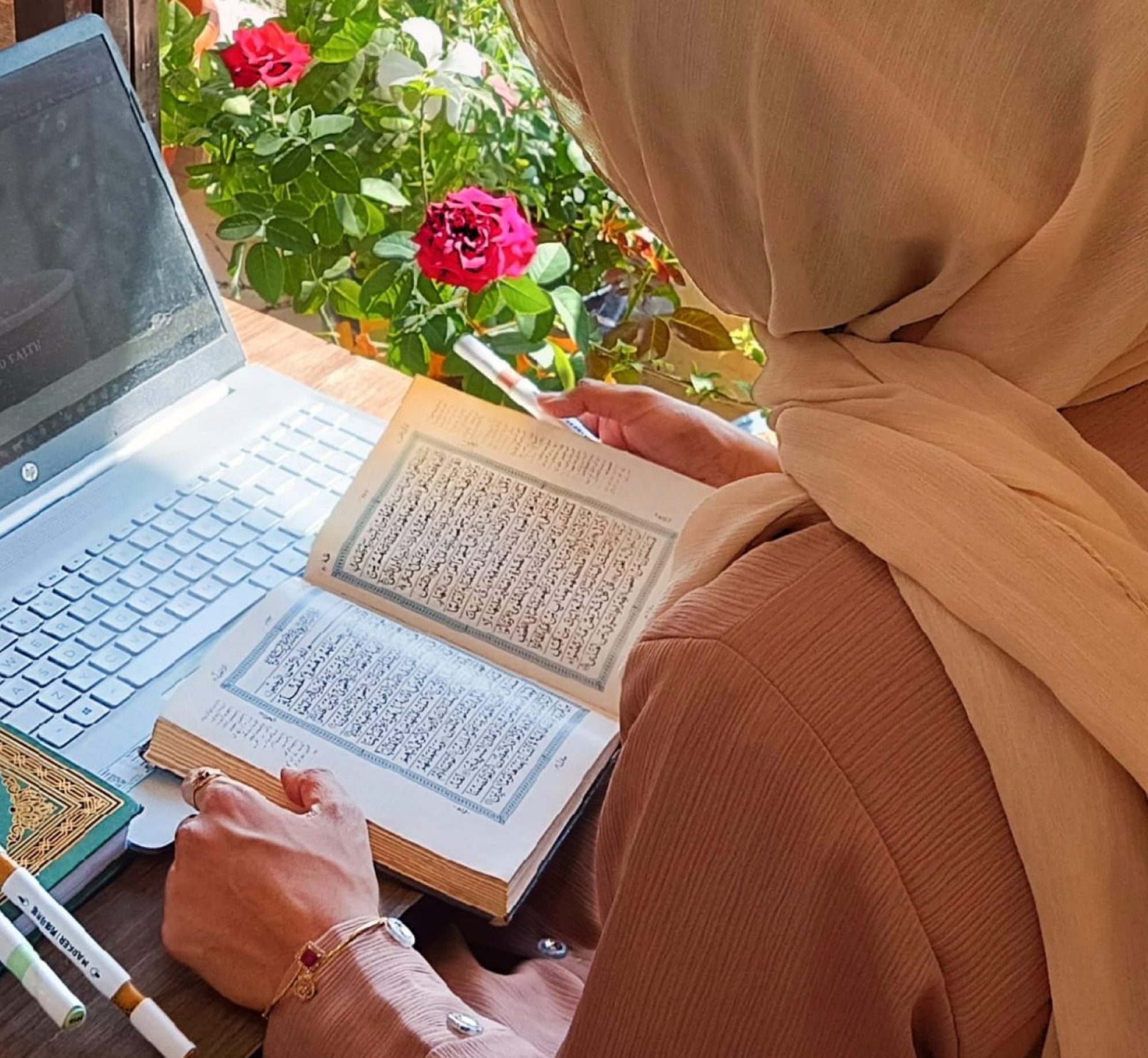
I was reading the Qur’an that day when I stumbled upon a verse that compelled me to pause and reflect. It felt like Allah was directly addressing the confusion the world has created around race, color, and human worth. Allah says:
Among His signs is the creation of the heavens and the earth and the diversity of your languages and your colors. Indeed, in that are signs for those who know.
(Qur’an 30:22)

I kept thinking about this ayah for a long time. I realized that diversity is not a social accident, nor is it something that we tolerate reluctantly. In fact, it is one of Allah’s signs, something sacred, deliberate, and deeply meaningful.
Then I came across another verse that completed the picture:
O mankind! We created you from a single male and female and made you into nations and tribes so that you may know one another. Verily, the most honorable of you in the sight of Allah is the one most mindful of Him.
(Qur’an 49:13)
In this moment I understood, Islam did not leave space for supremacist ideology or colour-based pride. Allah intentionally made us diverse. He honoured it and made it a part of our faith. Our worth in His sight is not tied to our skin tone, language, nationality, or ethnicity. What makes us special is Taqwa.
Islam teaches that every shade of skin, every culture, every language is part of Allah’s beautiful design. And once we truly understand that, there is no room left for racism, colourism, or discrimination in our hearts.
Islam’s revolutionary message against racism
Islam was one of the earliest and most powerful voices against color-based superiority. At a time when many societies normalized pride in race, tribe, or skin tone, Islam shattered that mindset unapologetically. All of us remember the final sermon of Prophet Muhammad ﷺ . But do we remember the part where He ﷺ said :
No Arab has superiority over a non-Arab, nor does a non-Arab have superiority over an Arab.
No white person has superiority over a black person, nor does a black person have superiority over a white person, except by righteousness and piety.(Khutbat al-Wada’)
Islam registered colourism as a sin and a spiritual disease. Yet, when I look around today, especially in the Indian context, the reality is painful. We live in a society where lighter skin is still idolized, where children grow up hearing hurtful comments about dark complexion, where marriage proposals, beauty standards, and even confidence are often tied to skin tone. Sadly, many Muslims, despite having such a powerful Islamic teaching, fall into this toxic trap.
We forget that Islam taught us dignity, equality, and brotherhood long before modern movements raised their voices. The problem is not in our faith. The problem is that we have distanced ourselves from its guidance. It is time that we in India live up to our teachings.
How We Break Our Daughters Before They Even Grow
In many Indian households, one of the first questions after a child is born is:
“Is the baby fair?”
And if it is a girl, the “mission fair-and-lovely” begins.

Desi aunties suddenly turn into expert chemists.
Out comes the besan, haldi, chandan, malai, yogurt, maybe even grandma’s secret ingredient from ancient civilization. The poor child is not a baby anymore. She becomes a marination project waiting to be cooked. But wait… she is born as a girl in a desi household. She is already cooked.
The dark skin is often laughed at and is passed off as “Harmless jokes.”
But these are not as harmless as they seem.
This little girl grows up with a squeezing heaviness in her chest. A voice constantly telling her she is “not beautiful enough” because Allah chose to paint her with a darker shade.
Sometimes I wonder how many great girls we have lost to this nauseating obsession with fairness. How many confident daughters, powerful leaders, joyful young women were dimmed just because the society taught them to hate their own reflection?
And it does not stop at childhood. I personally know of a woman who was repeatedly rejected for marriage by Muslim families simply because she was too dark. Eventually, she married a non-Muslim man who valued her heart, intellect, and kindness.
I mean, Allah gave us free will. But imagine abandoning the faith that you were born in, not because you were attracted towards a different ideology, but simply because people of your own community damned your skin tone more than they valued your personality.
When Qur’an is not the guidebook but society is

What breaks my heart the most is when mothers absorb this mindset so deeply that they pass it to their daughters. They love them, yet pressure them into skin whitening routines. They definitely do not intend harm, but ignorance often harms louder than intention.
Many of our elders do not intend to damage our self-worth. They themselves are victims of a cruel system. But that does not make the structure less destructive.
I often wonder what makes them do this to their own children?
What makes them nurture insecurity instead of confidence?
I guess the most telling reason is la-ilmi – lack of knowledge. They grew up hearing these ideas, not questioning them, and so they unknowingly passed them forward.
Cultural conditioning also plays a powerful role. For generations, society has fed us with standards of beauty and marriage requirements, until they began to feel like unquestionable truths. And when culture becomes louder than conscience, even loving parents end up protecting social expectations rather than protecting their child’s heart.
They were silent victims of this system once, and without awareness and courage, they unknowingly became contributors to the same cycle. And that is why conversations like this matter, and choosing compassion over conformity matters even more.
A memory that wasn’t funny
Let me share something from my own experience.
I am Indian with a wheatish complexion. When I was fifteen, one of my aunts compared me to my cousin, who was as fair as the milk in her tea. She looked dramatically at both of us and said:
“Well… children take their parents’ color. What can be done about it?”
She expressed her helplessness as if my skin tone were a tragic national crisis.
I laughed it off because I was always unapologetically me and too strong to be shaken. But not everyone can. Not every teenage girl has the courage to laugh while being subtly told she is lesser.
And I do not blame her entirely. She too was shaped by a system that normalized this thinking. But I do blame the system. I blame the silence of people of knowledge when they should have spoken louder. I blame how we dismiss this behavior as “jokes” when it silently damages souls.
That is why today, I refuse to stay quiet. I may not be great at answering back in the moment, but Alhamdulillah, I can write.
Remembering Bilal (RA)
Let us return to the heart of Islam. When we speak of Bilal (RA), we honour and admire him. We remember him as the beloved companion, the voice of the Adhan, the man whose footsteps the Prophet ﷺ heard in Jannah.
He was black, yet Islam dignified him.
So tell me…
How do we glorify a black sahabi in speeches yet silently degrade dark-skinned people among us?
How do we place Bilal (RA) on a pedestal in Islamic history, yet treat living “Bilals” around us as lesser? Bilal (RA) inspired thousands. His strength of faith touched hearts. In fact, he inspired me so deeply in my early days of learning Islam that I even wrote a poetry dedicated to him. Read my heartfelt poetry on him https://culturalreboot.com/2025/12/28/ahad-ahad/
Look at how the ones society labels “lesser” can spiritually elevate hearts.
Pause. Reflect. Repair.
Have you ever made someone feel small because of their skin tone?
Laughed at a joke?
Stayed silent?
Or maybe unknowingly contributed?
If yes, I pray Allah grants you the humility to admit it, seek forgiveness, and if possible, apologize to the person you hurt. Because “No to colourism” in Islam is not a slogan or a theory yet to be proven. It is a command of faith that must live in our hearts, homes, marriages, proposals, and parenting.
May Allah purify our hearts from arrogance and help us see beauty the way He created it, not the way society distorted it.
May the next generation of our children never learn to hate their own reflection, and may we raise a community of Muslims rooted in Islamic teachings who honour every shade of humanity as Allah commanded, never discriminating, belittling, or preferring one skin tone over another.
Ameen.
If you’ve experienced this or seen it happen, share your story in the comments below. May our words become a means of change.